
Built and refined since 2017 · Trusted for high-stakes personalized video campaigns by





- Personalized video is not just a first name in a video. It works best when the message reflects the viewer’s context, journey, concerns, and next step.
- Greater message fit creates greater business value. When people feel seen and understood, they are more likely to pay attention, trust the message, and take action.
- Surface-level personalization can limit campaign performance. Names, logos, and basic fields can help, but deeper relevance comes from using meaningful audience data.
- A clear business goal matters more than a flashy video. Personalized video should be tied to outcomes like registrations, renewals, upgrades, conversions, retention, or revenue.
- Teams should start with one real use case. The best first campaign is usually small, focused, measurable, and connected to a specific audience moment.

About Our Guest
Josías De La Espada is CEO of Pirsonal. For more than a decade, Josías has guided marketing, CX, sales, HR, and product teams worldwide in using personalized video to cut through noise, prove ROI, and engage audiences at scale.
With a background in advertising and innovation, he is recognized as an early pioneer in personalized video marketing—valued by clients for his strategic insights, responsiveness, and hands-on support that make complex campaigns succeed.
Transcript: Personalized Video Marketing That Fits: 18× ROI Case Study & Trends
00:00 — Bryan:
Hi everyone, and welcome to Keep It Personal. I’m Bryan from Pirsonal’s growth marketing team.
I’m really excited about today’s episode. Our guest is none other than Josías De La Espada, CEO of Pirsonal.
Today, we’ll be diving into a simple but powerful idea: the greater the fit, the greater the value.
We’ll talk about why making your messages more personal, especially through video, can change the way customers see your brand and even boost your sales.
So, Josías, thank you for joining us today. How are you?
00:35 — Josías:
I’m doing great. Thank you. Yeah, excited about this episode.
00:39 — Bryan:
So, when you say “fit” in the context of video personalization, what does that mean for you? Is it about making every message feel like it was made just for that one person?
00:51 — Josías:
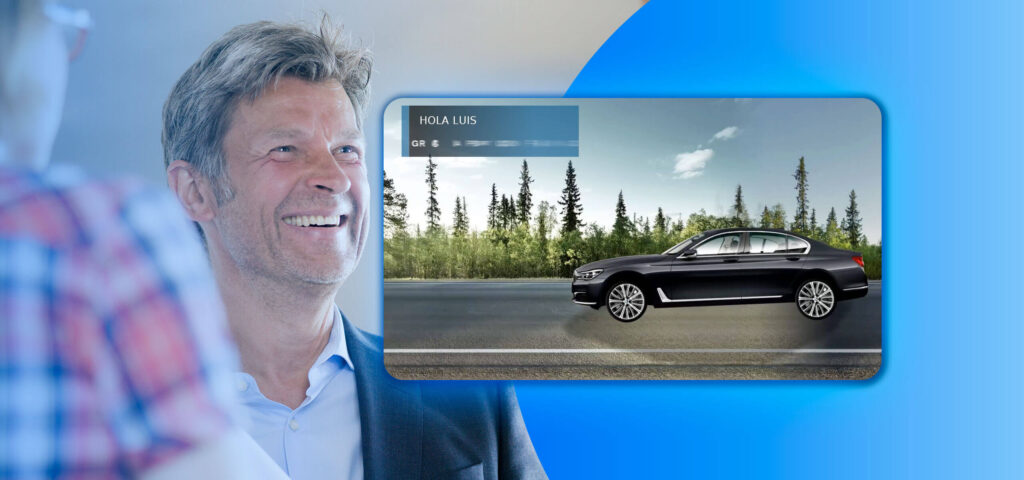
For example, in our context, at Pirsonal, it’s not just a video with someone’s name on it.
It’s more about making that person on the other side of the screen feel like, “This was made for me at this specific moment, in my context.”
Think about it like a conversation. If you go to pick a friend up from the airport, and maybe it’s been a month, two months, a year, or whatever without seeing each other, you won’t start with a generic speech.
You probably ask how the trip was, whether they enjoyed it, whether it was for work, and all those things. Because, in the end, you know a bit more about their context and their story, and you use that story to keep engaging with them.
With personalized videos, in our context at Pirsonal, it is similar. When it fits, it feels like a natural conversation. Contextual and even human, I would say.
01:57 — Bryan:
So it’s adding more of the emotion and the feelings in the video, right?
02:01 — Josías:
Mhm. Yeah. Every person has a unique context.
One of the most difficult things in marketing nowadays — it has been like that forever, but now even more in the digital world — is understanding what that context is, so that you are able to speak to that context.
Not only so that they pay attention, but also so that you help them in their unique journey.
And that’s when there is a fit, let’s say.
02:33 — Bryan:
Yeah, that’s amazing.
From your experience, why does greater fit lead to greater value, not just for the customer, but also for the business? And how does this personalization translate into real impact for their business?
02:50 — Josías:
People act when they feel seen. When they feel that you understand where they’re coming from. When they feel that you get their concerns.
Let me give you an example. One of our clients was targeting a really tough list of people who, at some point, had shown interest, but at some point had also disengaged.
When we looked at the data they had about these people — and when the client did the same, obviously — we saw that they had different concerns, different aspirations, and different preferences.
That’s easy to see when you have one individual and you take the time to have a conversation with them. But it’s a bit harder when you have a list of maybe 2,000, 5,000, 10,000, or whatever number.
The context about that information, that story, is behind the data. So you need to look at it from a different perspective.
In their case, instead of sending the same generic message, which they had done in the past to all of these contacts, their team created personalized videos that adapted to each individual — or to the context and journey of each individual — to where they were, where they are, and what expected next step they had somehow said they wanted to take.
From a business perspective, within weeks — I don’t know if it was two, three, four weeks, something around that — the first campaign, because this is a live campaign, had already driven about $200,000 in expected revenue.
With their numbers in mind, because I obviously know the account details, that’s an 18x return on investment.
Not because the videos were flashy, but because, through the video, a certain number of contacts felt that they were seen. They felt that the organization was trying to engage with them and was taking into account their concerns, aspirations, and all those things.
For the business, that translated into revenue, more revenue, and better ROI compared to other initiatives.
And from a contact perspective — in this case students, or let’s call them customers — it probably felt like the organization actually understood them.
That’s the fit you were referring to earlier.
05:32 — Bryan:
Yes, that’s amazing. Especially for the students, with the whole noise on social media, they feel this value, that there’s someone listening to them, and that they can see this greater value in them because this is specifically fit for them, right?
05:49 — Josías:
Mhm.
05:50 — Bryan:
And what are the biggest challenges when shifting, as you said, from generic messaging to something personalized, like a personalized video?
06:01 — Josías:
There are a few challenges.
I could choose from at least a mental list, but one easy one is surface-level personalization, which is the most tempting thing. And honestly, it is what the majority of people who reach out to us have in mind at the beginning.
Many companies, organizations, and teams — both on the agency side and internal in-house teams — will create videos that say “Hi Sarah” or “Hi Bryan.”
That’s the tempting thing.
It will work in many cases if the distribution is the right one, if the value proposition is properly crafted, and all those things. It is going to work compared to generic messages, or personalized messages in an email or PDF or whatever.
But it is still going to be generic.
The problem with that now, in 2025 and moving into 2026, is that people are busy. They have a lot of saturation. They have just too many messages.
You somehow referred to that when talking about social media platforms and all that.
So a “hello” or “hello Bryan” is going to be fine as an initial touchpoint to get their attention. But in many cases, and even more now, it’s not going to be enough — or it’s going to start not being enough.
Think about the example I just mentioned a few minutes ago.
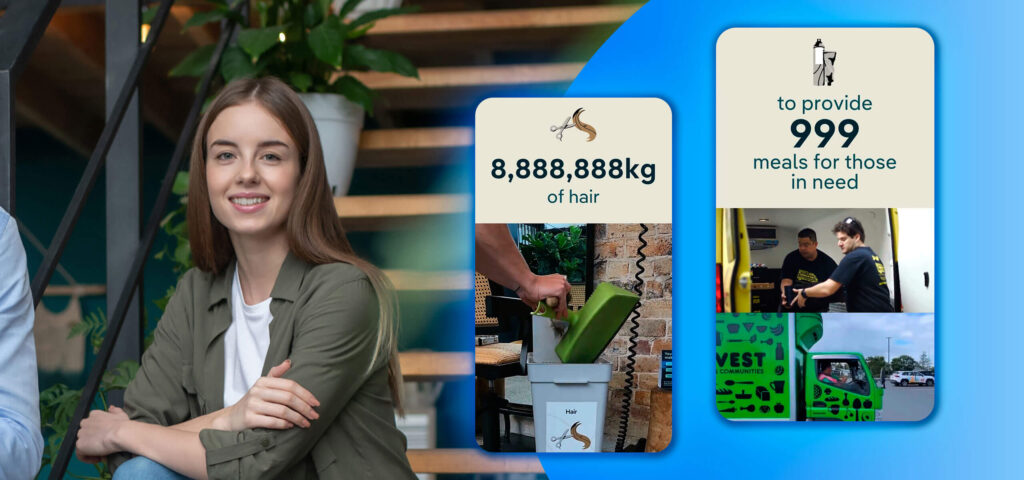
In their case, they took into account that they had their names, obviously. But they also took into account their concerns, objections, desires, aspirations, where they were from a journey perspective, and even things like their age.
For example, someone who has a concern about the financial side of paying for their education, maybe that person is single. That is different from someone in their 40s who wants to go back to college or university.
Those are different contexts.
So surface-level personalization is going to work if distribution, like email, is in place and if the value proposition is clear. But you are still limiting the potential impact you could have with video personalization.
That’s a big challenge.
Just to add one more big challenge — and this is a constant struggle when I speak to clients, especially leads before they become clients, from a sales perspective — is the lack of specific business goals.
I come from the creative field, advertising, and so on. Sometimes it is tempting and extremely easy to think about the content: colors, fonts, whether the brand is represented, how cool the personalization is, how we can add it here, here, here, and here.
All those things are exciting. Crafting the storyboard and all that.
However, the reason why we are doing this is not so that contacts, viewers, or your audience who are watching or listening to this just get excited about the video and say, “Wow.”
That’s not the goal.
The goal is, yes, to engage with them. We need that in order for them to pay attention at the beginning.
But the goal is to help them understand your specific value proposition, benefits, and so on, based on their context.
Basically, helping them understand how you can help, so that because of that, you make it easier for them to take the next step in their journey.
That next step in the journey is where many organizations fail, quote unquote.
Because it cannot be just higher engagement. We talk a lot about engagement here at Pirsonal, but it cannot be just generic engagement.
It needs to be something like: from 1,000 customers who saw this, we got 200 of them to upgrade. Or from a list of 1,000 people, we got 20 of them to sign up for XYZ. Or we reduced by X percentage the number of people who were churning each month because now they better understand how X, Y, and Z solution adapts to their unique needs and context.
And yeah, I have more, but we don’t have the time now.
11:18 — Bryan:
This is amazing. Basically, I think the biggest challenge right now is not getting too excited with a lot of things that might happen, and staying focused on the goal, right?
And also, as you mentioned, you are getting information so that it can have more context. It’s like having data and information coming from the audience that you will be sending these videos to, right?
11:49 — Josías:
Mhm.
11:49 — Bryan:
So how do you help clients balance scalability with personalization? Of course, there is a lot of data. How do they make thousands of videos but still make them feel personal?
12:06 — Josías:
Let me try to explain it in an easy way.
When we talk about video personalization, there are different options in the market. You can have real video files.
So if you have a list of 100 people, to keep it simple, with solutions like Pirsonal, you would create a unique video for each and every contact.
That way, you have unique analytics. You can create a unique story for that particular contact and all that.
When it comes to platforms like ours, in the end, it is as if you had a video editor working at lightning speed for every single contact.
Basically, creating or adding the text, the images, the audio files, the voice-over — everything — for every single individual, so that they get to see their unique story, or so that the brand communicates with them through that unique story using the most effective type of content, which happens to be video.
At Pirsonal, we use templates, and our clients have custom, on-brand templates that either their team, our team, or both of us together create — because we do that for our clients as well.
Each template could have a dynamic structure or a fixed structure.
Think about it like when you have “hello first name” in an email template. Something similar, but for video.
In these templates, you are basically mapping, injecting, or printing this information — images, audio files, all this information — so that the video editor, that person, doesn’t have to create video by video manually.
By leveraging our software, we can create — or they can create — 500 or 5,000 videos at scale in a super-fast way and securely as well, so that every individual gets a unique story through that video.
So the trick, quote unquote, is automation without losing humanity, while taking into account scalability, compliance, security, and all those things.
14:31 — Bryan:
Wow. I love the part that you mentioned, that it’s like a video editor working at lightning speed for each contact.
That’s really fast for a thousand videos that you will be making, while still making it personal, right?
14:46 — Josías:
That is correct.
14:48 — Bryan:
What’s the first step that you recommend for them to do?
14:51 — Josías:
Easy. Start small.
But start with a real use case.
Basically, pick a moment where that fit you were talking about really matters.
For some, it could be onboarding new clients in a faster way so that they don’t churn, or so that they don’t ask more questions than they should, quote unquote.
Or, maybe in the insurance industry, asking clients to renew based on the value the insurance policy has delivered over the last 12 months.
Or maybe it is sending a year-in-review, so that it is not a PDF with 20 pages people don’t read unless they really have to, or a long email, even with flashy animations and all that, but in a format people love — which is natural nowadays for digital people. We are all digital people. That format is video.
Start small with a specific use case, because otherwise you’re going to get overwhelmed.
Even then, we help you. But even then, we’re going to recommend starting with one specific use case.
Don’t worry about creating the perfect Hollywood-like video.
In the majority of cases, a simple base video personalized with real contact data will outperform a beautiful but generic piece because of the context.
We have seen this. I’ve been in this industry for more than 10 years, and now almost eight of those with Pirsonal, thank God. We have seen that in many occasions.
Importantly, get help. Get support.
Even experienced teams tell us that it’s hard to scale alone because it is not just about software.
The software will create videos automatically, landing pages, interactions, and all those things.
But what matters is the strategy, and what matters is the execution.
The reality is that many teams will not have experience with that strategy, or the time, bandwidth, or execution. Even putting the pieces together before the software can actually start scaling everything can be hard.
That’s why, in our case at Pirsonal, you know this: we walk alongside our clients, because that’s the best way to serve them, even beyond the software.
17:32 — Bryan:
That’s amazing. I love the part that you walk alongside the client for this one. We really need help for these kinds of new things in the industry.
Looking ahead, where do you see the future of video personalization in marketing going in the next few years?
17:52 — Josías:
It’s getting quite crazy, and that’s both fun and scary.
First, I think personalization will move beyond just “Hi first name.”
One of the big reasons for that is because, with AI — artificial intelligence — even teams that are not extremely creative, and obviously agencies, are able to creatively use their audience’s data to find ways to connect with that audience by crafting the right story for that context.
At a practical level, that’s something companies can do even now, just with the right mindset.
Second, there are many, many opportunities. I see two big groups of opportunities.
Number one would be helping in-house teams from brands and organizations do more by themselves, and then leverage the software infrastructure that is already in place to scale the creation, versus relying on agencies for certain scenarios.
And it’s not that agencies are not needed. Agencies are key more often than not, because they lead strategy. They have already seen many patterns, and they help — or great agencies can help — clients save a lot of time because they have already been there. They are exposed to many projects at the same time.
The second group is in terms of better ways to distribute or target the individual.
For example, at Pirsonal, we already have tools like Pirsonal Player, our interactive video player, and Pirsonal Widget for retargeting, remarketing, and so on.
We will see more ways to interact on a one-to-one basis and at scale with these contacts at the right time — and not only through channels like email.
We’ll see more one-to-one channels that, until now, have been one-to-many, let’s say, and not one-to-one.
I think there are going to be many great opportunities there, especially now in this cookieless, quote unquote, world.
There is more, but we don’t have the time to cover it right now. We could perhaps have another conversation about that, because that’s fun for another day.
20:53 — Bryan:
All right. This was such a valuable conversation.
Thank you so much for sharing your insights today.
For those who are listening, would you like to invite them, and how would they connect with you for video personalization?
21:09 — Josías:
Sure. So, pirsonal.com — Pirsonal with an “i.” That’s p-i-r-s-o-n-a-l.com.
They can find us there.
And if you go to /contact, they can contact us.
I’m almost always happy to share feedback, ideas, perspectives, and so on.
The reality is that both agencies and brands — the majority of them — do not have experience with this.
So at Pirsonal, one of the things we do is share a lot of information in order to help them not only make the best decision in terms of who they should work with, because sometimes it’s not us, but also how to get where they want to get from a business perspective, so that they better engage with their people and help these people take action.
The best way to contact us is simply by going to pirsonal.com.
In my case, they can find me on LinkedIn: Josías De La Espada. Good luck writing that name down now.
Or you can just search online for Pirsonal CEO, and they’ll find me there.
22:27 — Bryan:
All right. To those who are watching, don’t forget to message us at pirsonal.com.
That’s it for this episode of Keep It Personal.
Until next time, remember: the greater the fit, the greater the value.
Thank you so much, everyone.
22:43 — Josías:
Thank you. Thank you, everyone, for watching this video.
FAQ
We’ll walk through your data flow, hosting preferences, and compliance needs—so you can move forward with clarity and confidence.